
Employee Engagement and Retention Strategies That Actually Work
Employee engagement and retention strategies are among the biggest priorities facing Australian organisations today. Most organisations recognise the importance of employee engagement and retention, and are continually looking for ways to improve the employee experience and strengthen workplace culture.
The reality is that strong employee engagement and retention come from focusing on the things employees genuinely value: supportive managers, flexibility, career growth, recognition, wellbeing and a workplace experience that helps people feel connected to their organisation.
In hybrid workplaces, the office itself has become part of the equation. Employees are increasingly asking whether commuting into the workplace is worth their time. Organisations that successfully answer that question are often those that combine strong people practices with a workplace experience that feels welcoming, social and productive.
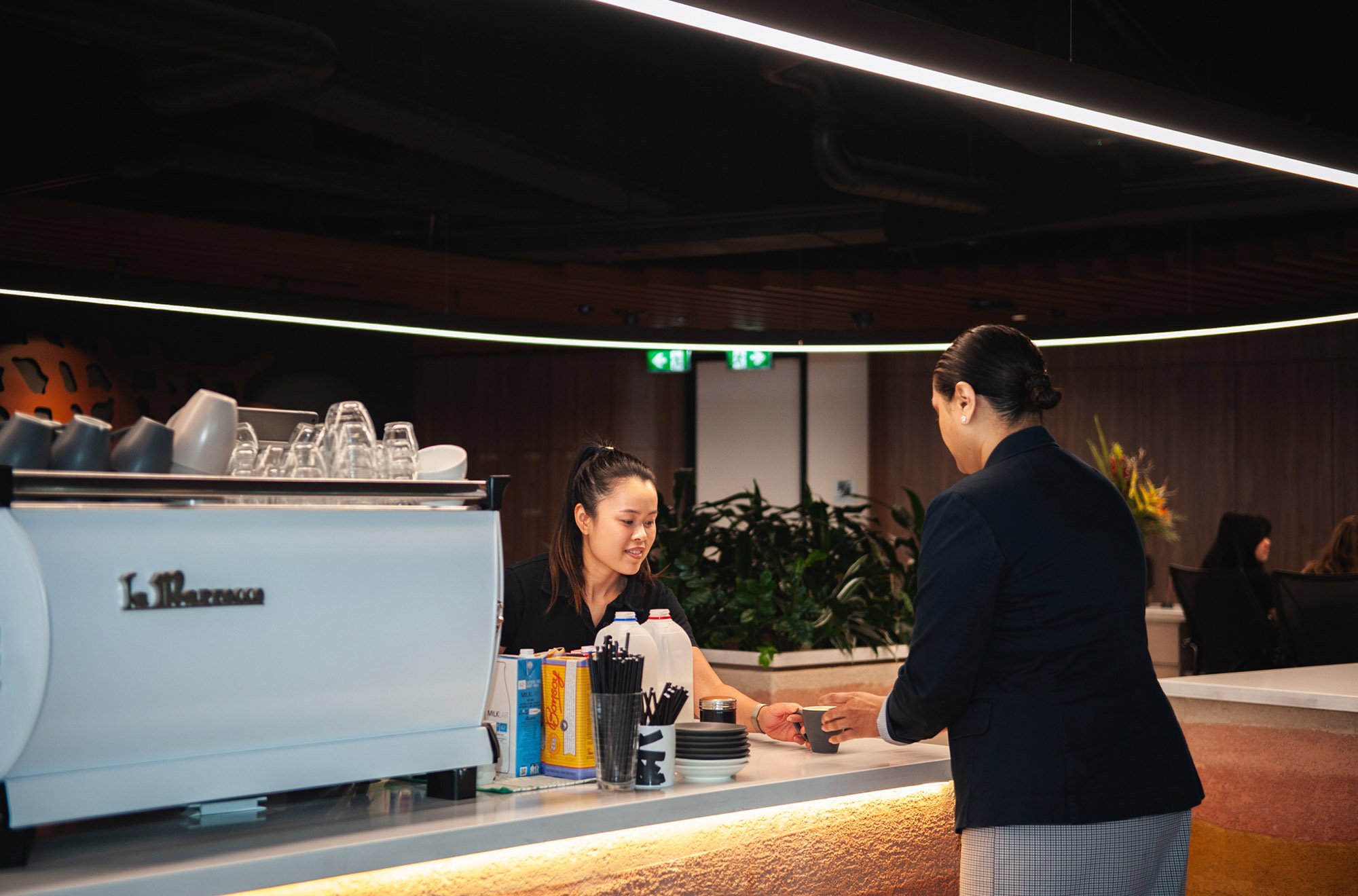
At Workplace Hospitality, we work with organisations to create workplace experiences that support connection, convenience and culture through café-style coffee bars, managed kitchens, pantry programmes and catering solutions. While workplace hospitality is not a replacement for good leadership or career development, it can strengthen broader employee engagement and retention strategies by making office days feel more worthwhile.

Why Engagement and Retention Need a Smarter Approach
Employee engagement and retention are closely connected, but they are not the same thing. Employee engagement refers to how connected, motivated and committed employees feel at work. Retention refers to whether employees choose to stay with an organisation over time.
An employee may remain with a company while feeling disengaged. Equally, highly engaged employees may leave if they cannot see future development opportunities, achieve work life balance or access meaningful career growth.
Hybrid work has changed expectations about work environments. Employees no longer come into the office simply because it is where work happens. They want office days to provide opportunities for collaboration, learning, connection and social interaction that cannot be replicated at home.
This means organisations need a more holistic approach to employee engagement and retention. Retention is rarely solved by a single policy or perk. Instead, it is built through a better everyday employee experience.
What Employees Actually Want From Work
Research consistently shows that employees value many of the same things regardless of industry or role.
Most employees want:
· Flexibility and autonomy
· Supportive managers
· Development opportunities
· Recognition and appreciation
· Manageable workloads
· Practical wellbeing support
· Clear career paths
· Meaningful connection with colleagues
· Office days that feel useful and productive
Importantly, employees are not anti-office. They are anti-pointless office time.
When employees feel that the workplace supports collaboration, learning and social connection, they are more likely to view office attendance positively.
8 Employee Engagement and Retention Strategies That Work
The most effective employee retention strategies focus on improving both people practices and workplace experience.
1. Invest in Better Managers
Managers have a significant influence on employee engagement and retention.
Employees often judge an organisation through their day-to-day interactions with their direct manager. Managers shape expectations, provide feedback, support career growth and influence job satisfaction.
Strong managers help:
· Build trust
· Clarify priorities
· Recognise performance
· Coach employees effectively
· Support hybrid teams
· Identify early signs of burnout
Simple practices such as regular one-on-one meetings, constructive feedback and meaningful recognition can significantly increase employee engagement. Employees are more likely to stay when they feel supported, respected and understood.
2. Make Flexible Work Clear and Purposeful
Flexibility has become a baseline expectation for many Australian employees. However, flexibility works best when it is supported by clear guidelines and purpose.
An effective employee retention strategy should include:
· Hybrid work frameworks
· Flexible scheduling
· Clear expectations across teams
· Defined reasons for office attendance
· Support for collaboration and mentoring
· Fair access to remote and in-office opportunities
The goal is not to maximise office attendance at all costs. The goal is to ensure office time creates value. Employees are more willing to commute when the workplace supports activities that are difficult to achieve remotely.
3. Create Clear Career Pathways
One of the most effective employee retention strategies is helping employees see a future within the organisation. Employees who cannot identify opportunities for progression are more likely to explore opportunities elsewhere.
Organisations should focus on:
· Internal mobility
· Mentoring programmes
· Training initiatives
· Leadership pathways
· Stretch assignments
· Career conversations
Clear career paths help employees understand how they can develop professionally without changing employers.
When organisations invest in growth opportunities, they strengthen both engagement and retention outcomes.
4. Recognise Employees in Meaningful Ways
Recognition remains one of the most powerful employee engagement strategies available to organisations. However, recognition only works when it feels authentic.
Effective recognition includes:
· Manager-led recognition
· Peer recognition programmes
· Celebrating team achievements
· Linking recognition to company values
· Acknowledging both effort and outcomes
Recognition helps employees feel valued and appreciated. When employees feel recognised for their contribution, they are more likely to remain engaged and committed to organisational goals.
5. Reduce Burnout and Work Friction
Many wellbeing initiatives fail because they focus on symptoms rather than causes. Employees are unlikely to remain engaged if their daily work experience feels frustrating, exhausting or unnecessarily complicated.
Organisations should focus on:
· Reviewing workloads
· Reducing unnecessary meetings
· Improving workplace systems
· Clarifying priorities
· Supporting focused work
· Acting on employee feedback
Reducing friction often has a direct impact on employee experience, productivity and retention. Employees are more likely to stay in organisations where work feels achievable and sustainable.
6. Make Office Days Worth the Commute
One of the biggest challenges facing organisations today is helping employees see value in coming into the office. The question is no longer whether employees can work remotely. The question is what the workplace offers that employees cannot get elsewhere.
Useful office days often include:
· Face-to-face collaboration
· Mentoring and coaching
· Team planning sessions
· Learning opportunities
· Social interaction
· Shared experiences
The office should support connection and culture, not simply provide a desk. This is where workplace experience becomes important.
Easy access to quality coffee, food, meeting spaces and collaborative environments helps create a more positive employee experience and can increase employee participation in office-based activities.
7. Use Workplace Hospitality to Support Culture and Connection
Workplace hospitality is often misunderstood as a collection of office perks. In reality, it can play a practical role in supporting employee engagement and retention. Hospitality-led experiences help create repeatable workplace rituals that encourage connection and belonging.
Examples include:
· Café-style coffee bars that act as informal meeting points
· Shared breakfasts and lunches
· Pantry programmes that make office days easier
· Catering for collaboration days and workshops
· Hospitality-led events that bring teams together
These experiences help employees connect naturally with colleagues throughout the day. A shared coffee break, team breakfast or catered workshop can create opportunities for interaction that would otherwise be missed in hybrid teams.
Workplace Hospitality helps organisations deliver these experiences consistently through office kitchen services, corporate coffee programmes, pantry management and workplace catering solutions. The objective is not simply to provide food or coffee. It is to create environments where employees feel welcome, supported and connected.
8. Listen, Measure and Improve
Organisations should not assume their engagement initiatives are working. The most successful organisations measure outcomes and adjust strategies over time.
Useful metrics include:
· Employee engagement surveys
· Pulse surveys
· Employee Net Promoter Score (eNPS)
· Turnover rates
· Retention rates
· Manager effectiveness scores
· Office attendance patterns
· Event participation
· Café and pantry usage
· Workplace experience feedback
Tracking these measures together provides a more complete picture of employee engagement and retention.
For example, organisations may discover that higher office attendance correlates with stronger engagement scores when employees participate in workplace experiences such as catered collaboration days or shared team events. This creates opportunities for continuous improvement.

How to Improve Employee Engagement Through Benefits
Many organisations ask how to improve employee engagement through benefits. The answer is not necessarily offering more benefits. Instead, focus on benefits that solve real workplace problems.
Employees are more likely to value benefits that:
· Save time
· Reduce daily friction
· Support wellbeing
· Encourage connection
· Support career development
· Improve convenience
· Strengthen work life balance
This is why workplace experience benefits often have a disproportionate impact. Employees interact with coffee bars, kitchens, pantry programmes and shared hospitality experiences regularly, making them visible and meaningful parts of everyday work.
Ready to Improve Engagement, Retention and Office Attendance?
The strongest employee engagement and retention strategies combine people, culture and workplace experience. Better managers, flexibility, recognition, wellbeing support and career growth remain essential foundations. However, in hybrid workplaces, the office experience also matters.
Employees are more likely to engage with their organisation when office days feel productive, connected and worth the commute.
Workplace hospitality can support this by creating environments that encourage collaboration, convenience and social connection. Because the most effective employee retention strategies are not about forcing attendance. They are about creating experiences that employees choose to be part of.
Through trusted workplace hospitality services, office kitchen services, reliable corporate pantry services and a corporate coffee service in Sydney, Workplace Hospitality helps organisations create workplaces that employees genuinely enjoy spending time in.
